Dutch and English wedding invitations for an international guest list
Written by the Wedvite founders
A Dutch and English Wedvite invitation puts both languages behind one link. Each guest switches between NL and EN, reads the invitation in that language and answers the RSVP there; every answer lands in one guest list. You pay $49 once for unlimited guests, and the second language costs $10.
Wedvite's list price is $89. This code brings it to $49, applied automatically at checkout:
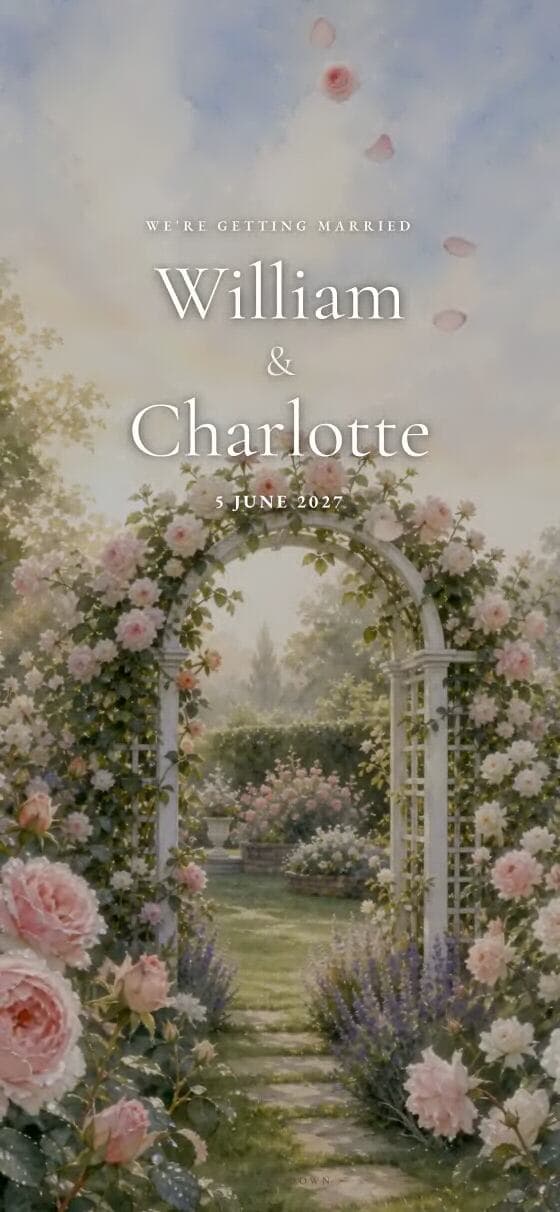
Tap to open the live invitation
What Dutch and English guests get
NL and EN for every guest
Your family in Utrecht reads Dutch and your colleagues at an international office in Amsterdam read English, all from one link.
See it →An RSVP form in Dutch
Questions, buttons and confirmation appear in Dutch for Dutch readers. The dietary option labels fall back to English there, while everything else on the form is translated; meal names show as you type them.
See it →One list of replies
Dutch and English answers collect in the same guest list, with every household's names and party size.
The same link after every change
If the borrel moves to a later hour, change it once and every guest sees the new time without a new message.
Map and times set once
The town hall, the party venue and each time are entered once and appear the same in both editions.
Real designs · open every preview
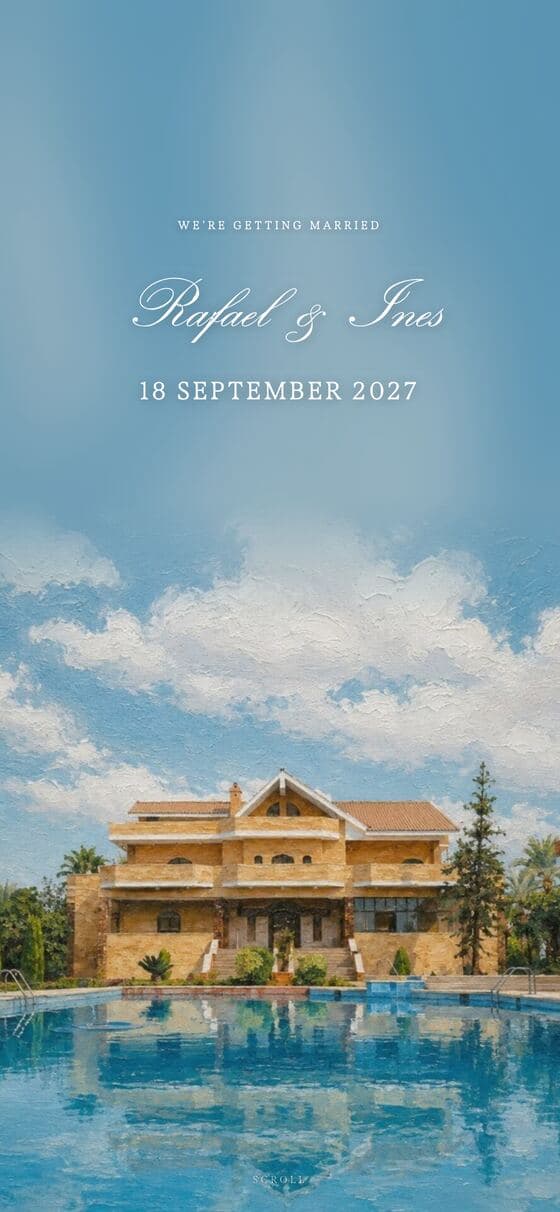
Designs Dutch and English couples start from

How does a Dutch and English invitation work?
You choose Dutch as the invitation language in the editor and add English as the second. The editor itself is in English while the invitation renders in Dutch, with headings, countdown and RSVP questions already translated. Each line you write has its own Dutch and English version, so 'Wij gaan trouwen!' and 'We're getting married' can each sound natural. Names and the date are typed only once.
Guests see your first language when the link opens and switch with NL / EN. In the Netherlands, where many guest lists mix Dutch family with international friends and colleagues, that keeps one invitation and one link: posted once in the family app group, emailed once to the office, never maintained twice. Switching language keeps the guest on the same page, with the same RSVP waiting at the bottom.
What does the second language cost?
The invitation is $89, paid once, including the first language, unlimited guests, the RSVP form and the opening envelope. Adding the second language costs $10, so Dutch and English come to $89 plus $10. Nothing is charged per guest, which keeps a large evening party from changing the bill. A wax seal, a venue sketch or your own music are optional extras with their own prices, shown before you pay.
Building costs nothing, and the free invitation can be shared with your first 10 guests before you pay, so a Dutch reader and an English reader can check their editions. Nothing reaches the rest of your list until you share the link. The language add-on appears in the editor in your currency, and the invitation is hosted through your wedding date and at least 90 days after.
How does Dutch wedding wording differ from English?
Dutch invitations are usually direct and personal: 'Wij gaan trouwen!' followed by the date and a warm line to the reader. Formal invitations use u ('nodigen u van harte uit'), but most couples write to family and friends with je or jullie. English sets its tone through set phrases instead: 'request the pleasure of your company' for a formal card, 'we would love you to join us' for a relaxed one.
The Dutch habit of daggasten and avondgasten, guests for the whole day and guests for the evening party, matters for wording. Name the parts clearly in both editions, 'ceremonie', 'diner', 'feest', so English guests understand which part of the day they are being invited to and when to arrive. A line such as 'Vanaf 20:00 ben je welkom op ons feest' tells evening guests exactly when they are expected.
- ✦Dutch, formal: „Sanne de Vries en Oliver Grant nodigen u van harte uit voor hun huwelijk“
- ✦English, formal: “Sanne de Vries and Oliver Grant request the pleasure of your company at their wedding”
- ✦Dutch, relaxed: „Wij gaan trouwen! Vieren jullie het met ons mee?“
- ✦English, relaxed: “We're getting married, and we'd love you to celebrate with us”
Can day guests and evening guests get different invitations?
Not from one link: everyone who opens it sees the same program, and there is no per-guest version of the schedule. Couples with daggasten and avondgasten usually publish the whole program and write the evening clearly, 'Feest vanaf 20:30 · Party from 8.30 pm', or keep the daytime rows short so evening guests are not confused. Schedule rows share one text between Dutch and English, so writing both languages in a row works well.
Belgian couples sometimes ask for Dutch and French on one invitation. Every line you write would still get its own Dutch and French text, but schedule rows and extra locations keep one shared Latin-script text, so those rows would need both languages written into them. With English as the partner language, that applies to the same rows. Times and map links are language-free in every case.
The questions everyone asks.
Can guests pick their language?+
Do both families RSVP on one list?+
Can I add a third language?+
Is the editor available in Dutch?+
How much does a Dutch and English invitation cost?+
Are the RSVP options translated into Dutch?+
One link. Every guest.
Design it free, share it with your first 10 guests, then pay $49 once for unlimited guests — RSVP, envelope and WhatsApp delivery included.
Start your invitation