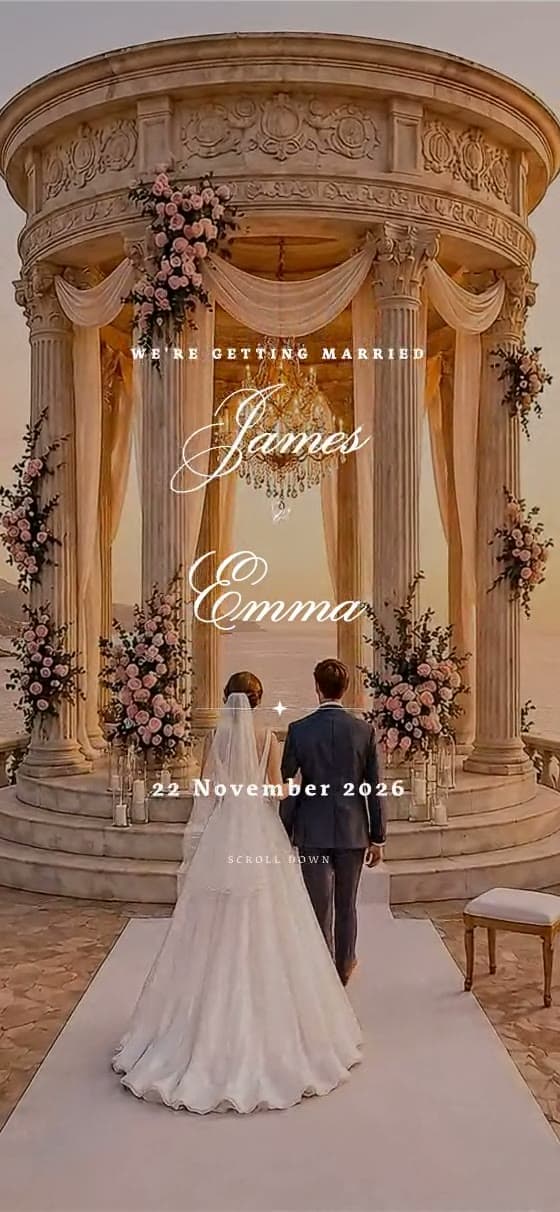
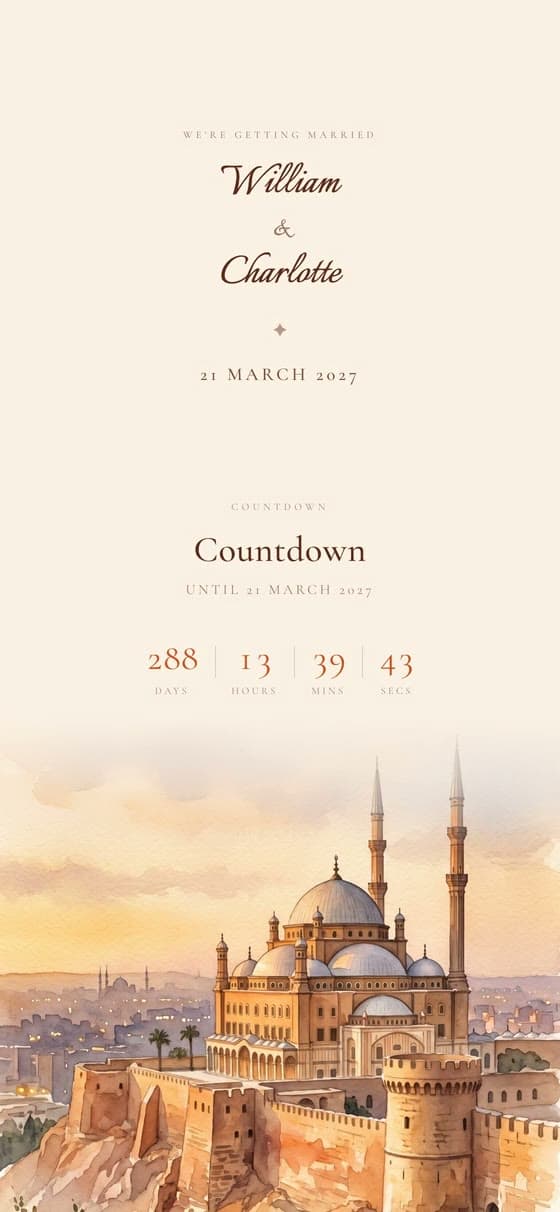
The same six facts every invitation needs — who, what, when, where, how to reply, by when — and then three lines that are particularly Australian. The first is the wishing well. If you would rather have a contribution than a gift, say so in one warm sentence on the invitation itself rather than leaving guests to ask each other; a digital invitation is a better place for it than a printed card, because you can word it once, read it back the next morning and change it.
The second is the dress code, which does more work here than elsewhere because the weather does. “Cocktail”, “lounge suit” or “garden party” tells a guest what to buy; “the ceremony is on grass” tells her what shoes to bring, and an outdoor wedding between October and April should say whether there is shade and what happens if it pours. The third is the practical block for guests flying in: the nearest airport, roughly how long the drive from it takes, one or two places to stay and whether there is a bus back to town at the end of the night. Put it on the invitation, not in a follow-up message, and you will answer thirty questions before they are asked.
Wording templates for all of it — formal, relaxed, both sets of parents named, second marriages, no-gifts lines — are on wedding invitation wording, and what to include is the full checklist. Because the invitation is editable after sending, a detail you get wrong today is a two-minute fix rather than a reprint: change it once and every guest sees the new version on the same link, including the ones who opened it weeks ago.